Tips & Articles

Mechanic working on a car engine with a wrench in hand.
March 1, 2026
See how mobile auto repair helps drivers in Rock Hill, South Carolina save on costs by reducing downtime, travel, logistics, and unnecessary repair scope.
Woman admiring the side of a brown car, touching it with her hand and smiling. In a car dealership.
February 22, 2026
Prepare your vehicle for sale with mobile body services in Rock Hill, South Carolina to improve curb appeal, buyer confidence, and resale presentation.
Hands typing on laptop displaying
February 15, 2026
Learn what insurance covers with mobile auto body repairs for drivers in Rock Hill, South Carolina, including collision claims, cosmetic damage, and approval steps.
Silver car front: headlights, grille, and bumper.
February 8, 2026
Learn how mobile headlight restoration improves night visibility for drivers in Rock Hill, South Carolina by restoring lens clarity, projection, and beam control.
February 1, 2026
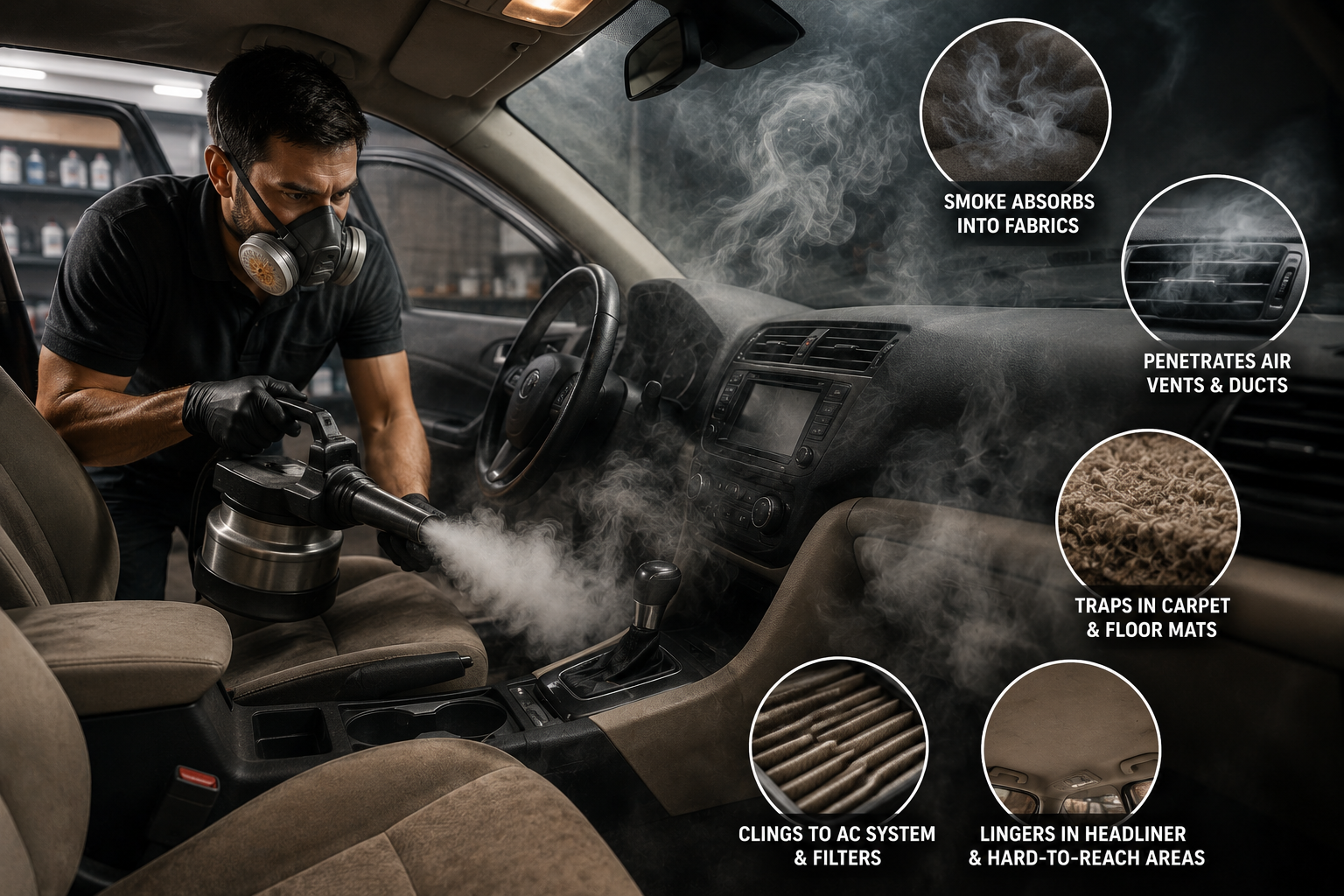
Car interiors pick up different kinds of odors throughout the year — humidity in summer, damp carpets after rain, leftover food smells from road trips, or musty air from the HVAC system when the seasons change. For many drivers in Rock Hill, South Carolina , the shift between warm, humid months and cooler seasons makes certain odors more noticeable inside the cabin. Some smells fade with simple cleaning, while others need deeper treatment because they’re caused by trapped moisture, bacteria, or residue inside fabrics and vents. Knowing when to clean, where to look, and how to handle seasonal odor sources makes a big difference in how fresh your vehicle stays throughout the year. Why Cars in South Carolina Develop Odors More Easily South Carolina’s climate plays a major role in how odor develops inside a vehicle. Warm air, humidity, and sudden temperature changes cause moisture to settle in carpets, seat fabrics, and ventilation paths. Over time, that trapped moisture turns into mildew or sour smells — especially in vehicles parked outdoors around Rock Hill. Moisture isn’t the only factor. Everyday habits such as eating in the car, transporting gym clothes, or leaving windows cracked during light rain can lead to lingering smells that become stronger as temperatures rise. Seasonal cleaning helps prevent those odors from building up. Summer Odor Problems and How to Deal With Them Before getting into cleaning actions, it helps to understand why summer odors tend to smell stronger. Hot weather warms interior materials and releases old trapped scents that weren’t noticeable in cooler months. The most common warm-season odor triggers are sweat, spilled drinks, and moisture in upholstery. Heat-Activated Odor in Seats and Carpets Sweat, sunscreen residue, and spills sink into fabric and react to heat. When temperatures rise in Rock Hill, South Carolina , those trapped scents intensify with each warm afternoon. A deep fabric rinse or extraction is more effective than surface wiping because it flushes what’s inside the fibers rather than masking the smell. Food and Drink Spill Odors Fast-food wrappers, spilled coffee, and crumbs stick to carpet padding beneath the surface. These smells become especially noticeable after the car sits in the sun. Cleaning is most effective when the spill area is first located, pre-rinsed, and then flushed instead of scrubbed — scrubbing simply spreads residue deeper. Fall & Winter Odors: Moisture, Rain, and HVAC Mustiness Colder months bring a different kind of odor challenge. Instead of heat-activated smells, most odors come from damp fabrics, tracked-in water, and reduced ventilation. Before addressing removal methods, it’s helpful to identify how these smells form during cooler seasons in Rock Hill. Rain-Soaked Floor Mats and Carpet Padding Shoes track moisture into the cabin after rain or wet grass. The top carpet may feel dry, but the padding beneath can stay damp for days and eventually smell sour. Drying requires airflow beneath the fabric — not just surface vacuuming — so lifting mats and allowing circulation is key. Musty Air From Climate Control Vents When AC condensation sits inside the evaporator or ducts, it can create that familiar “old sock” or mildew smell when the fan first turns on. Running the fan without AC for a short period after parking helps evaporate leftover moisture before it settles. A Simple Seasonal Odor Check Routine for Rock Hill Drivers This is a short, practical routine drivers can follow at the start of each season to prevent odors before they become difficult to remove. Check moisture-prone areas first Look under floor mats, near seat rails, and inside trunk carpet panels — these are common damp zones after rain. Run the fan and AC in both warm and cool settings If a musty smell appears through the vents, it’s likely related to trapped condensation or bacterial buildup. Inspect areas where spills previously occurred Old spill locations often resurface as temperatures change, especially on rear seats or passenger carpet. Air out the cabin after cleaning Leaving doors open briefly in a shaded area helps fabrics dry fully and prevents odor from returning. Common Odor Sources and How to Treat Them The table below matches typical odor problems South Carolina drivers experience with fitting treatment approaches — useful when you’re unsure where the smell is coming from.
Man in white shirt looking at the bed of a silver pickup truck in a showroom.
January 25, 2026
Find out when mobile bed liner installation is the right choice for truck owners in Rock Hill, South Carolina, including timing, protection, and real-world use cases.
Person polishes a red car with a buffer, wearing a mask and safety glasses in a shop.
January 19, 2026
Protect fresh auto paint with proper curing care, gentle washing, shade parking, and maintenance tips for drivers in Rock Hill, South Carolina.
November 16, 2025
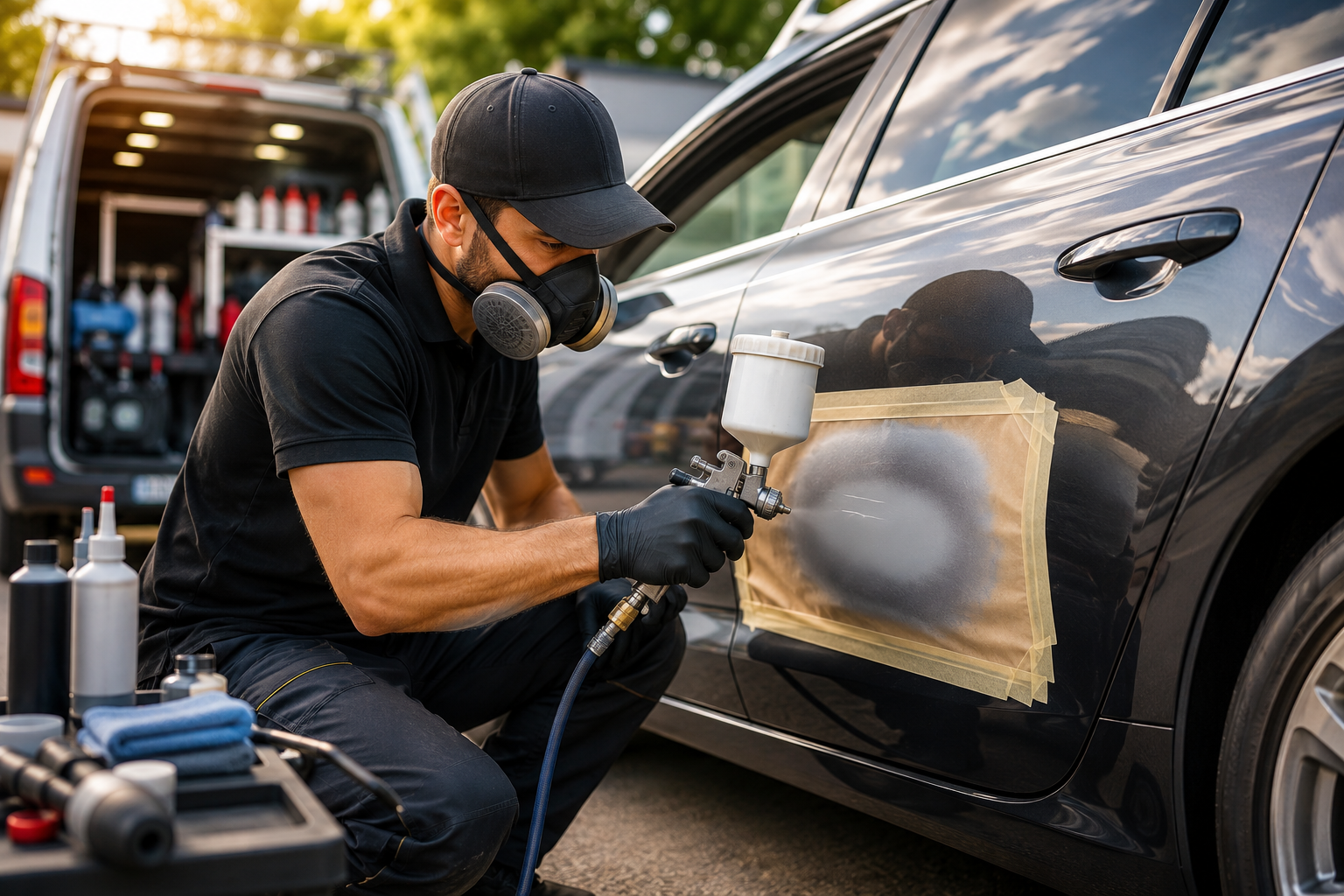
Life is busy enough without adding a trip to the body shop to your schedule. Whether it’s a dent, scratched paint, hazy headlights, or a lingering car odor, the thought of dropping off your vehicle, arranging alternate transportation, and waiting days for the work to be done is stressful. That’s why Mobile Brewer brings professional auto body and detailing services directly to your driveway or workplace. In this post, we’ll show how on-site service works, why it’s faster and more convenient than traditional shops, and how it helps South Carolina drivers get back on the road with less disruption. What Makes Mobile Brewer Different Mobile Brewer is more than just a repair service — it’s a mobile solution for dents, scratches, headlight restoration, odor removal, and more. Instead of driving to a shop, waiting for an appointment, and leaving your car behind, our technicians come to you with the tools, equipment, and expertise to do the job on-site. Key Advantages of On-Site Service Choosing a mobile auto service offers several benefits over traditional repair options: No Downtime: Your car stays with you — no waiting for days at a body shop. Schedule Flexibility: Appointments are set around your availability, often same-day. Convenience: Service is performed at your home or office, saving you the trip. Cost Efficiency: Without shop overhead, you often save money on labor. Peace of Mind: You can see the work being done and ask questions on the spot. This level of service is designed for busy professionals, parents, and anyone who values their time as much as their vehicle. How the On-Site Process Works Here’s what happens when you book a mobile service with Mobile Brewer: Step 1: Quick Estimate You send photos or describe the issue, and we provide a fast, transparent estimate so you know what to expect before we arrive. Step 2: Scheduled Appointment We set a time that works for you — during your workday, while you’re at home, or even while you run errands. Step 3: On-Site Setup Our technician arrives with all necessary tools, protective coverings, and materials to perform the repair safely at your location. Step 4: Professional Repair or Detailing From paintless dent removal to headlight restoration, we perform the service on-site, often in under an hour for smaller jobs. Step 5: Quality Check & Customer Review You get to inspect the finished result before we leave to ensure you’re completely satisfied. Step 6: Immediate Drive-Ready Vehicle Unlike body shops that may hold your car for days, your car is ready to drive as soon as we’re done. Common Questions About Mobile Auto Services Is on-site work as good as shop work? Yes. Our technicians use professional-grade tools and techniques that meet or exceed shop standards, delivering high-quality results. Do I need to provide anything for the appointment? Just a safe, flat space to work (driveway, parking spot) and access to your vehicle. We handle everything else. What types of repairs can be done on-site? We specialize in dent repair, scratch touch-ups, paint correction, headlight restoration, and interior odor removal. How long does a typical service take? Most minor repairs take 30–90 minutes. More extensive work may take a few hours but is still completed the same day. What if the weather is bad? We can often work under carports, in garages, or reschedule for better conditions to ensure a flawless result. Conclusion With Mobile Brewer’s on-site service, you get high-quality repairs without sacrificing your time or convenience. We come to you, complete the work quickly, and get you back on the road the same day — no shop waiting rooms, no transportation hassles, and no lost time. If you’re in South Carolina and need dent repair, paint touch-ups, or detailing services, schedule a mobile appointment today and see how stress-free auto care can be.
November 9, 2025
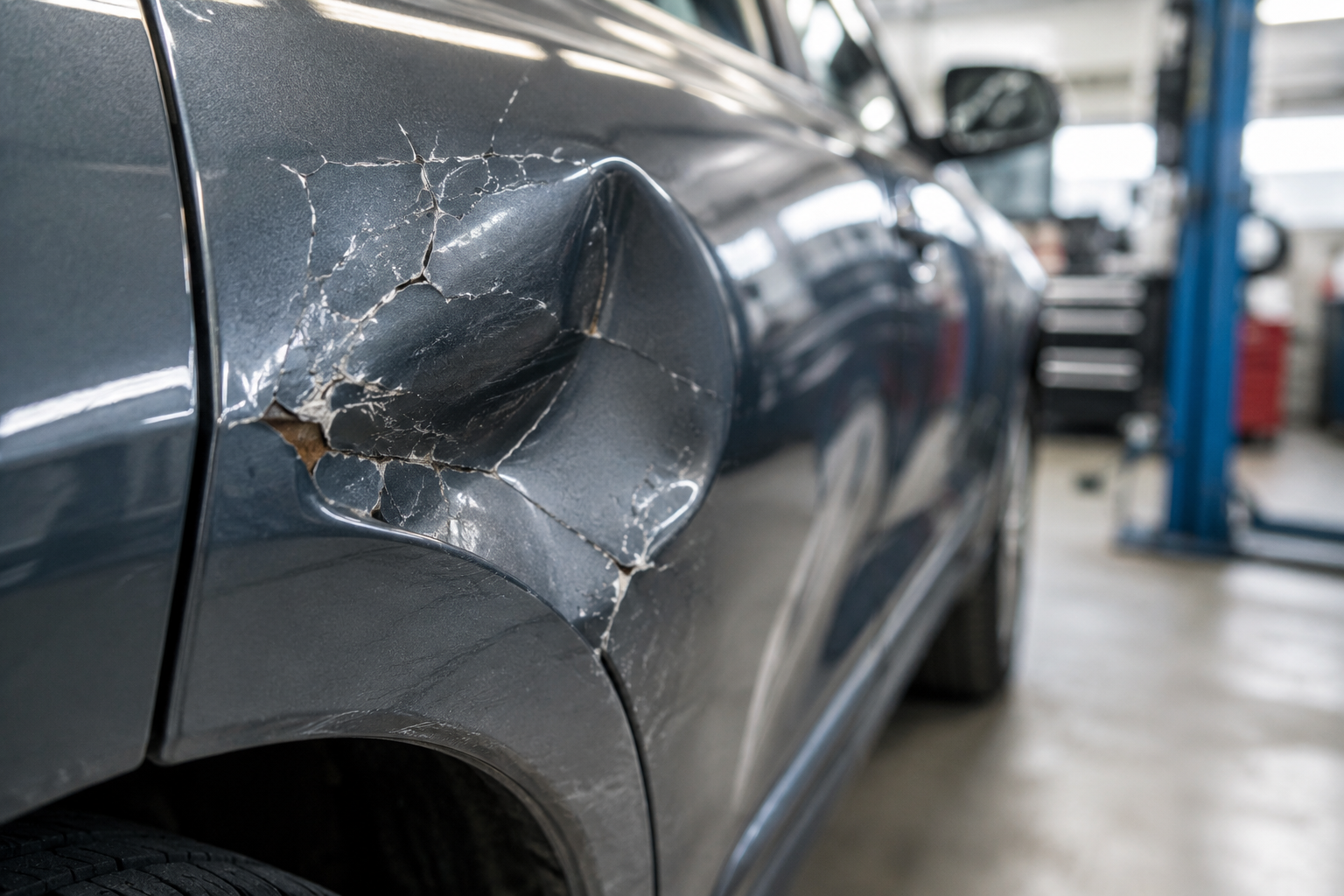
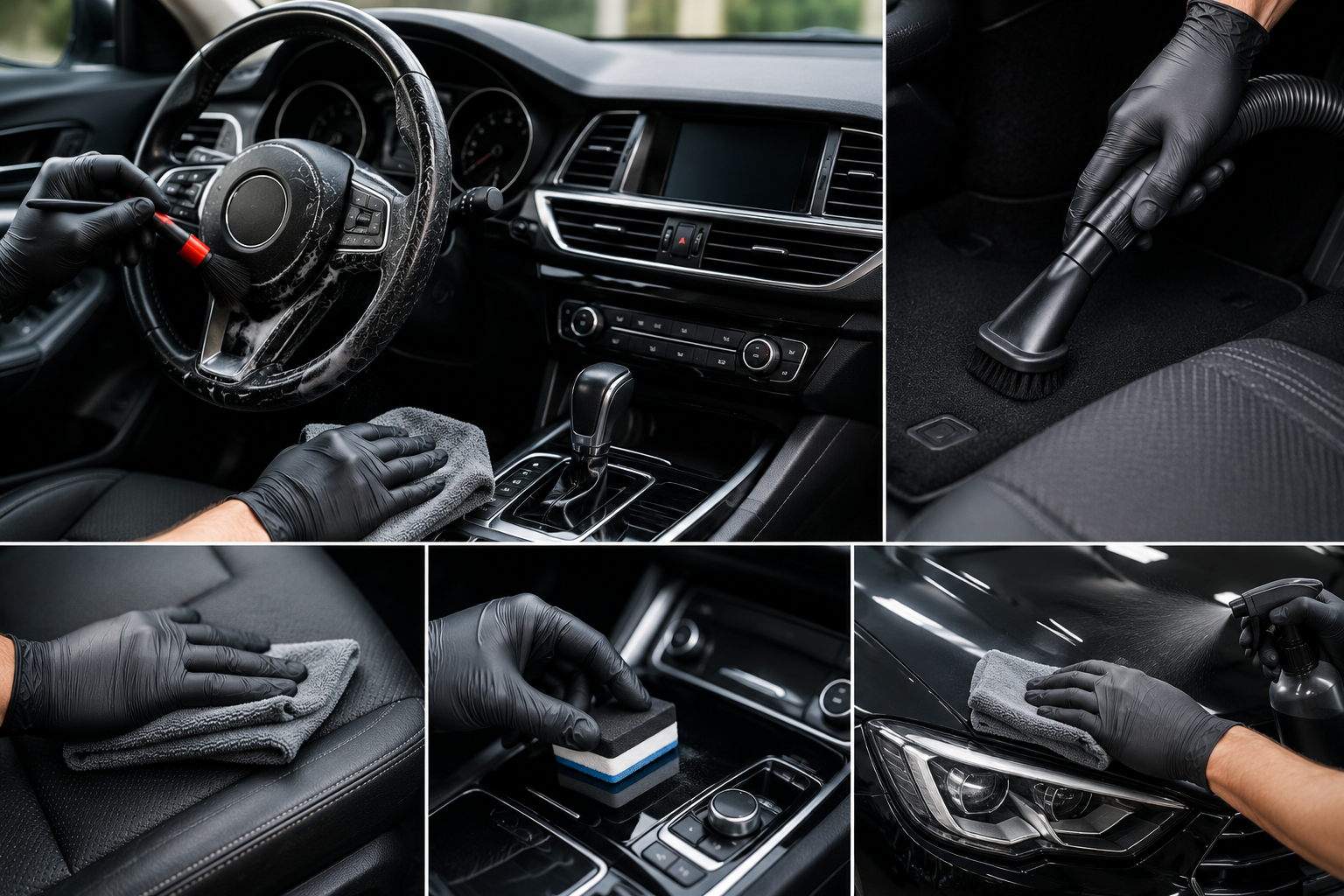
You’ve just had your car repaired after a dent, collision, or paint damage — and it looks like new again. The question now is: how do you keep it that way? Post-repair care is one of the most overlooked steps in car ownership. Proper maintenance ensures your investment in bodywork lasts longer, your paint stays flawless, and your car holds its value. In this article, we’ll break down smart, practical steps you can take right after auto body repair to preserve your vehicle’s finish and protect it from future damage. Why Post-Repair Care Matters Auto body repairs aren’t just cosmetic. They often involve blending new paint with factory paint, aligning panels, and protecting against future corrosion. Without proper aftercare, you risk: Premature fading or peeling of new paint Swirl marks and scratches from improper washing Water spotting if clear coat isn’t protected Rust formation if repaired panels aren’t maintained Protecting your repair isn’t just about keeping your car pretty — it’s about protecting structural integrity and preventing costly rework down the road. Smart Care Tips for Your Vehicle After Repair Follow these tips to ensure your fresh repair job stays looking showroom-new. 1. Follow the Paint Curing Period Fresh paint needs time to fully cure. Avoid waxing or applying sealants for at least 30 days unless your repair shop specifies otherwise. During this period, you can still gently wash your vehicle with pH-balanced soap and microfiber towels. 2. Use Gentle Washing Techniques Skip harsh brushes or drive-through car washes. Instead: Hand wash with soft mitts and two-bucket method Rinse thoroughly to remove dirt and road salt Dry with clean microfiber towels to prevent water spots 3. Apply Protective Coating After Cure Once the paint has cured, protect it with a quality wax, sealant, or ceramic coating. This adds a sacrificial layer, shielding the surface from UV rays, rain, and contaminants. 4. Park in Covered or Shaded Areas Charlotte and South Carolina sun can be harsh. Whenever possible, park in a garage or shaded area to minimize UV exposure and reduce temperature stress on fresh paint. 5. Watch for Unusual Changes Inspect the repaired area weekly for the first few months. Look for bubbling, peeling, or uneven color. If you spot anything unusual, contact your repair shop right away — many offer warranties that cover touch-ups. 6. Maintain a Regular Cleaning Schedule Staying consistent is key. Wash at least once every 1–2 weeks and remove bird droppings, sap, or bug splatter promptly to prevent etching. 7. Consider Paint Protection Film (PPF) If the repaired area is on the front bumper, hood, or doors, adding a clear paint protection film can help prevent rock chips and scratches in the future. FAQs About Post-Repair Care Can I wax my car right after repair? No. Wait until the paint is fully cured — usually 30 to 60 days — before applying wax or sealant. Will rain damage fresh paint? Normal rain won’t harm fresh paint, but avoid harsh chemicals or acidic rain exposure without washing shortly after. Should I polish the repaired area? Only if recommended by your body shop. Over-polishing too soon can thin the clear coat or create swirls. Can I take my car through an automatic car wash? It’s better to wait until after the curing period and use touchless washes if needed. Brushes can introduce scratches. Does new paint match the old paint exactly? Professional shops blend color for a seamless finish, but proper aftercare helps both areas age evenly over time. Conclusion Taking care of your car after auto body repair is just as important as the repair itself. With the right washing techniques, protection strategies, and regular inspections, you can keep your car looking like the damage never happened. If you’ve recently had a dent repaired or a panel repainted and want to protect your investment, we can help. Ask us about paint protection options , ceramic coatings, and routine detailing to keep your car looking showroom-fresh for years to come.
November 2, 2025
Learn how clear coats protect your car’s paint from UV, scratches, and weather. Get tips to maintain your finish in Charlotte’s climate.
Show More