Can Delaying Dent Repairs Increase Paint Damage Costs?
May 30, 2026
A small dent may not seem urgent at first, especially if the vehicle still drives normally and the damage appears minor from a distance. Many drivers in Rock Hill, South Carolina continue using their vehicles for weeks or months before scheduling repairs, assuming the issue is mostly cosmetic.
What often gets overlooked is how dents can gradually affect the paint surrounding the damaged area. Once the surface bends or stretches, the paint layer may begin weakening even if cracks are not immediately visible. Over time, exposure to heat, moisture, road debris, and vibration can turn a simple dent into a larger paint repair problem.
Understanding how delayed dent repairs affect paint damage costs can help vehicle owners avoid more expensive bodywork later.
Dent Damage Does Not Always Stay Cosmetic
Some dents only affect the outer panel slightly, while others place stress on multiple surface layers underneath the paint.
The longer the damage remains untreated, the more opportunities there are for the surrounding paint to deteriorate.
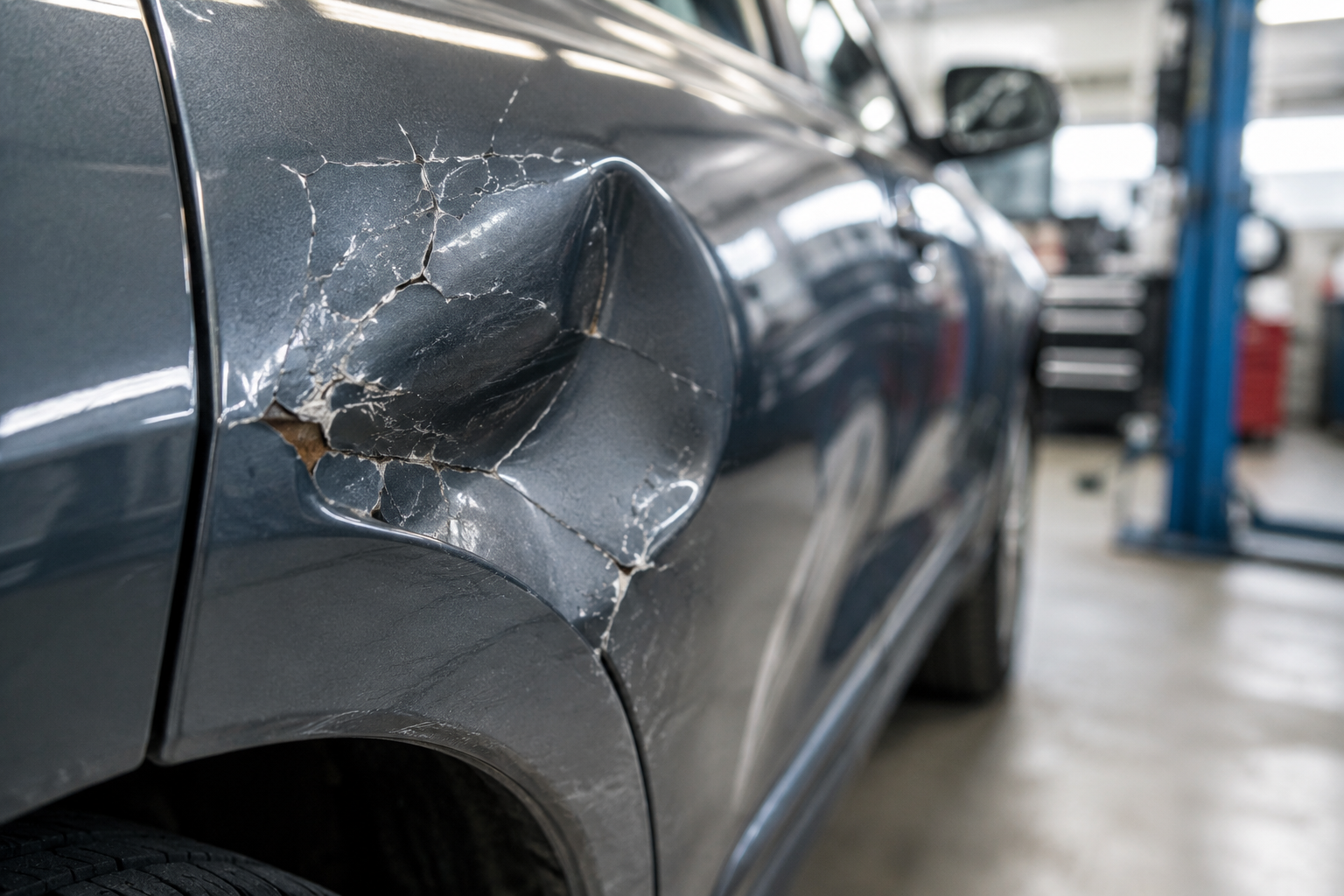
Paint Can Crack Around the Impact Area
When metal bends during an impact, the paint above it stretches as well. Even if the paint initially appears intact, microscopic fractures may already exist beneath the surface.
In Rock Hill’s warm climate, repeated heat expansion and cooling cycles can worsen those weakened areas over time. Eventually, the paint may begin cracking around the dent edges.
Once that happens, repairs often become more involved because technicians must address both the dent and the damaged finish.
Moisture Exposure Can Create Additional Problems
Damaged paint no longer protects the metal underneath as effectively.
Once cracks or chips develop, moisture can begin reaching exposed surfaces. This increases the risk of:
- Rust formation
- Paint bubbling
- Clear coat peeling
- Surface corrosion
- Discoloration around the dent
These problems often require more extensive refinishing compared to repairing the dent alone.
The Location of the Dent Affects Paint Damage Risk
Some sections of a vehicle are more vulnerable to worsening paint damage than others.
Areas exposed to direct sunlight, road debris, or frequent moisture usually deteriorate faster once damage occurs.
To understand why certain repairs become more expensive, it helps to compare where dents happen most often.
| Dent Location | Why Paint Damage May Worsen Faster |
|---|---|
| Hood | Constant sun exposure and debris impact |
| Roof | Heat buildup weakens paint over time |
| Door edges | Frequent movement stresses paint |
| Wheel arches | Moisture and dirt collect easily |
| Front bumper | Repeated road debris exposure |
| Trunk edges | Paint can chip from repeated use |
Vehicles parked outdoors regularly in Rock Hill often experience faster paint deterioration due to prolonged UV exposure and changing weather conditions.
Delaying Repairs Can Change the Repair Method
Timing often determines whether a dent can be repaired simply or requires additional refinishing work later.
Minor dents with intact paint may qualify for paintless dent repair early on. However, once paint damage develops, the repair process usually changes completely.
How Repair Costs Increase Over Time
The progression usually happens in stages.
- A dent forms after impact.
- Paint stretches around the damaged area.
- Heat and vibration weaken the finish.
- Small paint fractures begin forming.
- Moisture reaches exposed surfaces.
- Rust or paint peeling develops.
- Full repainting becomes necessary.
A repair that may have started as a straightforward dent correction can eventually involve sanding, priming, repainting, and blending nearby panels.
Paintless Dent Repair Is Not Always an Option Later
Paintless dent repair works best when the original paint remains stable and undamaged.
Once cracking or peeling appears, technicians often need conventional body repair methods instead.
Situations Where Paintless Dent Repair Usually Works
Paintless dent repair is often possible when:
- Paint remains intact
- The dent is shallow
- Metal is not sharply creased
- Damage is recent
- Rust has not formed
Situations Where Traditional Repairs Become Necessary
More extensive repairs are often required when:
- Paint starts cracking
- Rust develops
- Metal stretches heavily
- Sharp creases appear
- Previous repairs weaken the panel
The difference between these repair methods can significantly affect total costs.
Weather in Rock Hill Can Accelerate Paint Problems
Environmental conditions play a major role in how quickly dent-related paint damage worsens.
Vehicles exposed to outdoor parking, high temperatures, and humidity often experience faster paint deterioration once surface damage occurs.
Heat Expansion Places Stress on Damaged Paint
Metal expands and contracts throughout the day as temperatures change.
When paint already has stress fractures from a dent impact, repeated expansion can cause those weak points to spread further. This is especially common during hot South Carolina summers when vehicle surfaces remain exposed to direct sunlight for extended periods.
Road Debris Can Worsen Existing Damage
Once paint weakens around a dent, additional debris strikes can remove more protective coating.
Common causes include:
- Gravel from highways
- Loose construction debris
- Dirt and sand
- Car wash brushes
- Flying road particles
These repeated impacts often accelerate peeling or chipping around the original dent.
Some Vehicle Finishes Cost More to Restore
Paint repair pricing can vary depending on the vehicle’s finish and color.
Certain paint systems require more labor-intensive blending and refinishing procedures after dent damage spreads.
Paint Types That Often Increase Repair Costs
Some finishes are harder to restore evenly after damage occurs.
These commonly include:
- Metallic paints
- Pearl finishes
- Matte coatings
- Tri-coat paint systems
- Custom paint colors
Matching these finishes correctly may require additional blending into surrounding panels to avoid noticeable color differences.
Frequently Asked Questions About Dent and Paint Damage
Can a small dent eventually damage paint?
Yes. Even minor dents can weaken the paint surface, especially after prolonged heat exposure and vibration.
Does rust always form after a dent?
Not always, but the risk increases once paint cracks or chips expose bare metal underneath.
Why do some dent repairs cost more later?
Delayed repairs may involve repainting, rust removal, or panel refinishing in addition to fixing the dent itself.
Can paintless dent repair fix dents with chipped paint?
Usually not. Paintless dent repair works best when the paint surface remains intact.
How soon should dent damage be repaired?
It is generally best to repair dents early before paint deterioration or corrosion begins.
Conclusion
Delaying dent repairs can increase paint damage costs over time, especially when weakened paint begins cracking, peeling, or exposing metal underneath. What starts as a minor cosmetic issue can eventually require more extensive bodywork and refinishing if moisture, heat, and road exposure continue affecting the damaged area.
For drivers in Rock Hill, South Carolina, early dent repairs can help preserve both the vehicle’s appearance and long-term condition.
Mobile Brewer
provides auto body repair services for vehicle owners dealing with dents, paint damage, and cosmetic surface issues throughout the area.
You might also like