
Why Can Smoke Odors Be Harder to Remove From Cars?
June 25, 2026
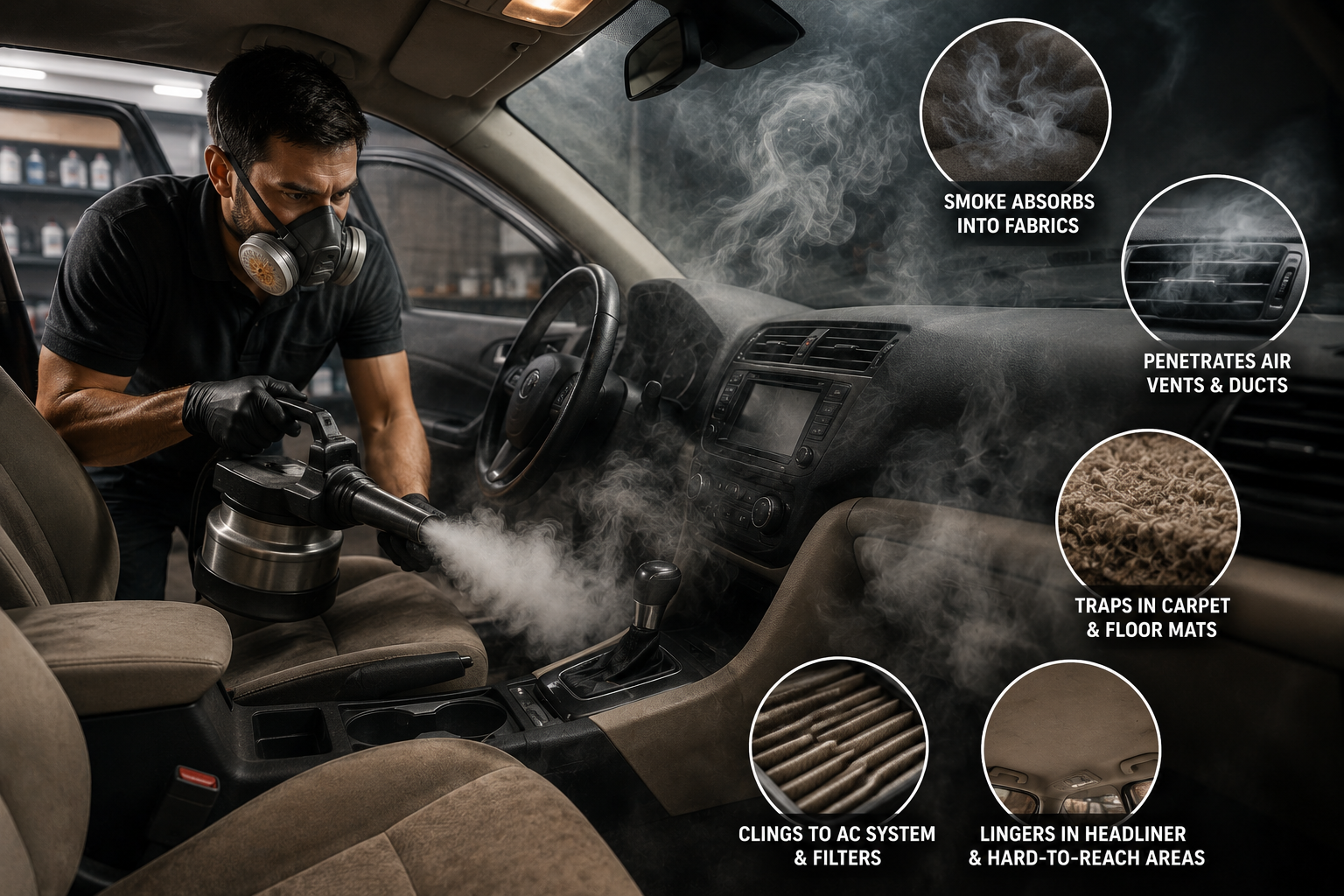
Smoke odors inside a vehicle often linger far longer than people expect. Even after vacuuming, wiping surfaces, or using air fresheners, the smell can continue returning days or weeks later. In some cases, the odor becomes even stronger during hot weather.
Many drivers in Rock Hill, South Carolina discover that smoke smells are difficult to eliminate because the odor does not stay in just one place. Smoke particles spread throughout the cabin, settle into soft materials, and penetrate ventilation systems that are difficult to reach during normal cleaning.
Removing smoke odors completely usually requires more than surface-level cleaning. The type of smoke, how long it remained inside the vehicle, and the materials affected can all influence how extensive the odor removal process becomes.
Smoke Particles Spread Through the Entire Interior
Smoke does not remain isolated near the seats or dashboard. Once released inside a vehicle, microscopic particles circulate throughout the cabin and attach themselves to multiple surfaces.
That widespread contamination is one of the main reasons smoke odors become difficult to remove completely.
Soft Materials Absorb Odors Quickly
Porous materials inside a vehicle trap smoke particles deeply within their fibers.
The areas most likely to absorb smoke include:
- Cloth seats
- Carpet fibers
- Headliners
- Seat belts
- Floor mats
- Door panel fabric
Once smoke settles into these materials, the odor may continue resurfacing whenever humidity or heat increases inside the vehicle.
Ventilation Systems Can Hold Hidden Smoke Residue
Smoke particles often move through the air conditioning and heating system while the vehicle is running.
Over time, residue may build up inside:
| Vehicle Component | Why Odors Stay Trapped |
|---|---|
| Cabin air filters | Smoke particles collect inside fibers |
| Air vents | Residue sticks to internal surfaces |
| Evaporator coils | Moisture traps odor particles |
| Ductwork | Air circulation spreads the smell |
| Fan systems | Residue recirculates repeatedly |
Even if the cabin itself looks clean, hidden buildup inside the ventilation system can continue spreading smoke odors throughout the vehicle.
Different Types of Smoke Create Different Problems
Not all smoke odors behave the same way.
The type of smoke involved often changes how difficult the odor removal process becomes.
Cigarette Smoke Often Builds Up Gradually
Long-term cigarette smoking inside a vehicle creates repeated layers of residue over time.
Nicotine and tar settle onto interior surfaces slowly, eventually coating:
- Windows
- Dashboards
- Upholstery
- Plastic trim
- Headliners
Vehicles exposed to years of cigarette smoke often require extensive deep cleaning because the contamination spreads into nearly every interior material.
Fire and Burned Material Odors Can Penetrate Deeper
Smoke from electrical fires or burned materials can create even stronger odor penetration.
These smells may contain heavier particles that attach aggressively to surfaces and remain embedded long after the original smoke source is gone.
Some burned odors also react differently to heat, becoming more noticeable during warm afternoons in Rock Hill.
Heat Makes Smoke Odors More Noticeable
Many drivers notice that smoke smells seem weaker in the morning but stronger later in the day.
Temperature changes inside the vehicle are usually responsible.
Warm Temperatures Reactivate Trapped Odors
When a vehicle heats up under sunlight, materials inside the cabin begin releasing trapped particles back into the air.
This process commonly affects:
- Cloth seats
- Carpets
- Foam padding
- Interior trim adhesives
South Carolina heat can intensify this issue, especially during summer when cabin temperatures rise significantly after outdoor parking.
Humidity Can Also Increase Odor Strength
Moisture in the air can reactivate odor-causing residue trapped in fabrics and ventilation systems.
In humid conditions, smoke particles may become more noticeable because damp materials release odors more easily than dry surfaces.
This is one reason smoke odors sometimes return even after basic cleaning attempts.
Surface Cleaning Usually Does Not Remove the Source
Many vehicle owners attempt to remove smoke smells using sprays, wipes, or air fresheners. While these products may temporarily reduce the odor, they often fail to remove the source itself.
Air Fresheners Usually Mask the Smell
Most over-the-counter odor products only cover the smoke scent temporarily rather than eliminating contamination.
The smell often returns because smoke particles remain trapped underneath the surface.
Temporary masking methods may include:
- Hanging air fresheners
- Fragrance sprays
- Scented cleaners
- Vent clip products
These products can sometimes combine with smoke residue and create even stronger odors inside the cabin.
Deep Cleaning Is Often Necessary
Removing smoke odors effectively usually requires cleaning beyond visible surfaces.
Depending on the severity of contamination, technicians may need to clean:
- Upholstery fibers
- Carpet padding
- Ventilation systems
- Interior plastics
- Headliners
- Air filters
The goal is to remove embedded particles instead of simply covering the smell.
The Length of Exposure Changes the Difficulty
Smoke odors are usually easier to remove when addressed early.
The longer smoke remains inside a vehicle, the more time particles have to settle deeply into materials.
Recently Exposed Vehicles May Need Less Work
Vehicles exposed to temporary smoke odors may respond well to targeted cleaning if addressed quickly.
Short-term contamination often stays closer to the surface layers of interior materials.
Long-Term Smoke Exposure Creates Layered Contamination
Vehicles exposed to months or years of smoking usually require far more extensive odor removal procedures.
Long-term exposure can lead to:
- Yellowed interior surfaces
- Sticky residue buildup
- Deep fabric contamination
- Persistent ventilation odors
- Repeated odor reactivation during heat
In severe cases, some interior materials may need replacement if odors remain embedded too deeply.
Some Vehicle Materials Hold Smoke More Than Others
Different interior materials absorb smoke at different rates.
Certain surfaces trap particles more aggressively, making odor removal more difficult.
Materials That Commonly Retain Smoke Odors
Some materials are especially prone to holding smoke residue:
| Interior Material | High |
|---|---|
| Foam padding | High |
| Carpet | High |
| Leather | Moderate |
| Plastic trim | Moderate |
| Glass surfaces | Lower |
Vehicles with cloth interiors often require more extensive odor treatment compared to interiors with less absorbent materials.
Frequently Asked Questions About Smoke Odor Removal
Why does smoke smell return after cleaning?
Smoke particles may still remain trapped in upholstery, carpets, or ventilation systems even after surface cleaning.
Can hot weather make smoke odors worse?
Yes. Heat can reactivate trapped particles and release odors back into the cabin air.
Do air fresheners permanently remove smoke smells?
Usually not. Most air fresheners temporarily mask odors instead of removing the contamination source.
Can smoke odors affect vehicle resale value?
Yes. Strong smoke odors can lower resale appeal because many buyers consider persistent smells difficult to remove.
How long does smoke odor removal usually take?
The process depends on the severity of contamination. Light odors may require less work, while long-term smoke exposure can involve more extensive interior cleaning.
Conclusion
Smoke odors can be difficult to remove because smoke particles spread throughout the vehicle, penetrate soft materials, and circulate through ventilation systems. Heat, humidity, and long-term exposure often make the problem even more persistent over time.
For drivers in Rock Hill, South Carolina, addressing smoke odors early can help prevent deeper contamination and more extensive interior cleaning later. Mobile Brewer provides
vehicle interior cleaning and odor removal services for drivers dealing with smoke-related interior issues throughout the area.
You might also like