Do Cheap Bed Liners End Up Costing More Long-Term?
July 2, 2026
Truck bed liners are designed to protect the bed from scratches, dents, moisture, and cargo damage. For many truck owners in Rock Hill, South Carolina, choosing a cheaper bed liner may seem like a practical way to save money upfront.
The problem is that not all bed liners provide the same level of protection or durability. Some lower-cost options begin wearing down much faster than expected, especially when exposed to heavy use, direct sunlight, rain, and shifting cargo.
What initially looks like a cheaper solution can sometimes lead to higher long-term expenses through rust repairs, repainting, liner replacement, or truck bed damage. Understanding where cheaper bed liners commonly fail helps explain why long-term costs can vary so much between products.
Some Cheap Bed Liners Wear Down Faster
Truck beds experience constant friction from cargo movement, tools, equipment, and weather exposure. Lower-quality liners often struggle to handle repeated stress over time.
Thin Materials Break Down More Easily
Some inexpensive liners use thinner materials that provide less impact resistance.
As cargo shifts during driving, weaker liners may begin developing:
- Scratches
- Tears
- Cracks
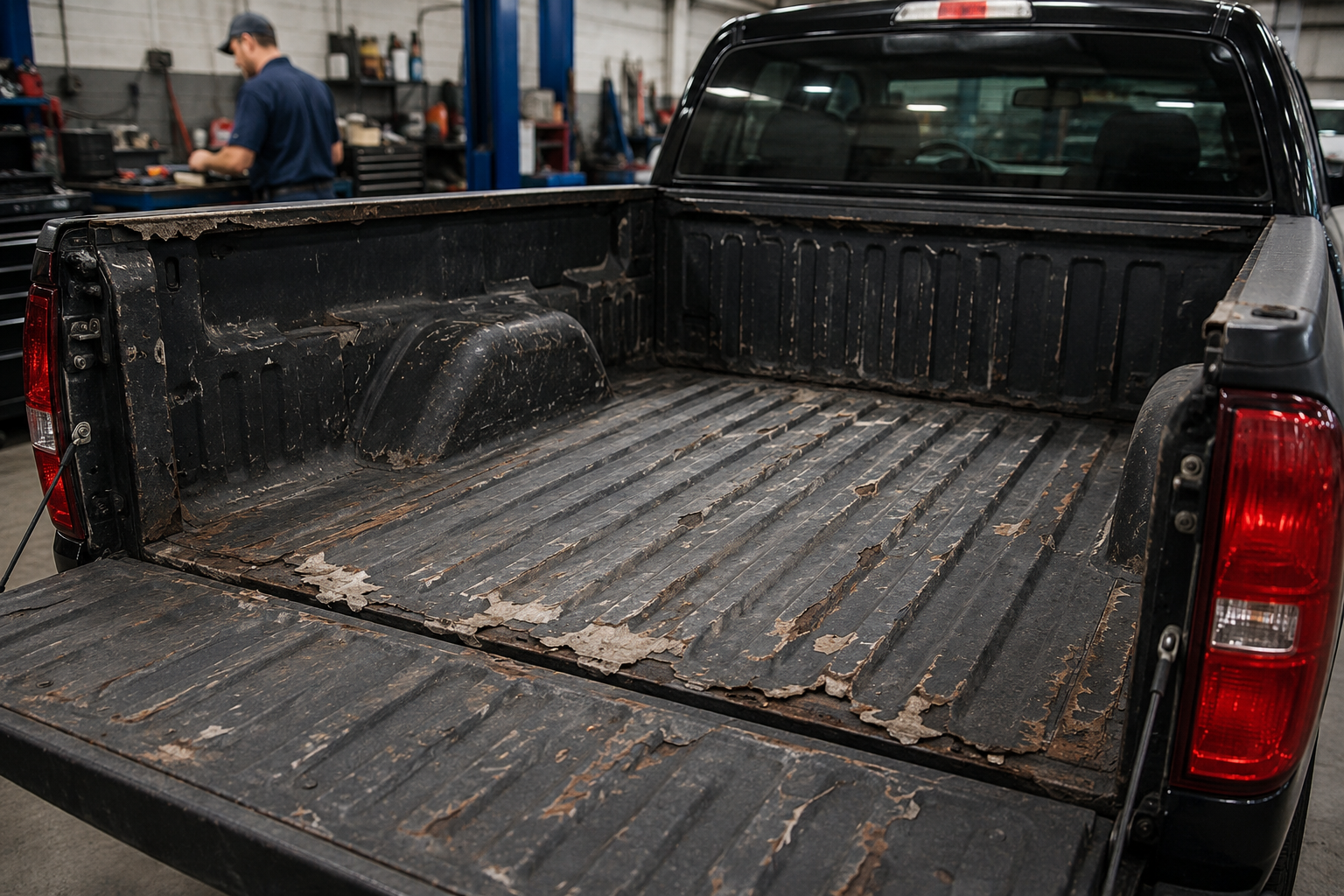
- Surface peeling
- Worn texture areas
Once protective coverage weakens, the truck bed underneath becomes more vulnerable to damage.
Sun Exposure Can Accelerate Deterioration
Vehicles parked outdoors in Rock Hill often experience intense heat and UV exposure throughout the year.
Lower-grade liners may begin fading, drying out, or becoming brittle under repeated sunlight exposure. Over time, weakened material can crack or separate from the truck bed surface.
This is especially common with liners that lack stronger UV-resistant coatings.
Moisture Problems Can Lead to Rust Repairs
One of the biggest long-term risks with lower-quality bed liners is moisture intrusion.
Once water becomes trapped underneath the liner, corrosion can begin forming in hidden areas of the truck bed.
Loose Fitment Creates Water Traps
Some lower-cost liners may not fit tightly against the truck bed surface.
Small gaps can allow:
- Rainwater
- Mud
- Dirt
- Debris
- Road salt
to collect underneath the liner over time.
Because moisture often remains hidden, rust may continue spreading unnoticed until visible damage appears later.
Rust Repairs Usually Cost More Than Prevention
Repairing rusted truck beds often involves more than simple cleaning.
Depending on the severity, technicians may need to:
- Remove the damaged liner
- Sand or grind rusted areas
- Repair weakened metal
- Apply corrosion treatment
- Repaint affected sections
- Install new protective coating
These repairs can become far more expensive than investing in better protection from the beginning.
Different Bed Liner Types Perform Differently
Not all bed liners fail in the same way. Material type and installation quality both affect long-term durability.
To understand the difference more clearly, it helps to compare common bed liner options.
| Bed Liner Type | Common Long-Term Concerns |
|---|---|
| Drop-in plastic liners | Moisture buildup underneath |
| Thin spray-on liners | Faster wear and fading |
| Low-grade rubber mats | Sliding and trapped debris |
| Poorly installed coatings | Peeling or uneven adhesion |
| Higher-quality spray liners | Better long-term protection |
The cheapest option upfront is not always the most cost-effective over several years of use.
Heavy Truck Use Increases Wear Faster
Some truck owners place far more stress on bed liners than others.
A truck used occasionally for light hauling may experience minimal wear, while work trucks often face constant cargo movement and rough loading conditions.
Work Trucks Usually Need Stronger Protection
Commercial and utility trucks often carry:
- Construction materials
- Power tools
- Landscaping equipment
- Metal cargo
- Heavy machinery parts
Repeated loading and unloading increases the chances of liner wear and surface impact damage.
Lower-quality liners may begin failing much sooner under these conditions.
Cargo Movement Creates Repeated Friction
When cargo slides across the truck bed, friction gradually wears down protective surfaces.
Over time, this can create:
- Exposed metal spots
- Surface gouges
- Coating separation
- Scratched paint underneath
The more movement occurring during transport, the faster lower-grade liners typically deteriorate.
Cheap Installation Can Also Increase Costs
The quality of installation matters just as much as the liner material itself.
Even stronger liners may fail early if preparation and application are done poorly.
Poor Surface Preparation Weakens Adhesion
Spray-on liners require careful preparation before installation.
If the truck bed is not cleaned and prepared correctly, the coating may struggle to bond properly to the surface.
This can eventually lead to:
- Bubbling
- Peeling
- Uneven texture
- Edge lifting
- Premature coating failure
Uneven Coverage Leaves Vulnerable Areas
Thin or inconsistent application may leave certain sections less protected than others.
Corners, wheel wells, and edges are especially vulnerable when coating thickness is uneven.
Over time, these weak spots often become the first areas where damage begins appearing.
Replacing Cheap Bed Liners Adds More Expenses
A lower-cost liner that fails early may eventually require removal and replacement.
That process can increase long-term ownership costs significantly.
Removal Sometimes Reveals Hidden Damage
When older liners are removed, technicians may discover:
- Rust underneath
- Scratched paint
- Trapped debris
- Moisture damage
- Surface corrosion
Repairing those issues before installing a new liner adds additional labor and material costs.
Reinstallation Creates Additional Downtime
Truck owners using their vehicles for work may also lose productivity while repairs and liner replacement are completed.
For commercial vehicles in Rock Hill, downtime itself can become an added long-term expense.
Higher-Quality Bed Liners Often Last Longer
More durable bed liner systems are usually designed to resist abrasion, moisture, UV exposure, and repeated cargo movement more effectively.
While the initial investment may be higher, long-term maintenance and repair costs are often lower.
Features Commonly Found in Higher-Quality Liners
Stronger bed liner systems often provide:
- Better UV resistance
- Stronger surface adhesion
- Thicker protective coatings
- Improved moisture resistance
- Better impact protection
These features help reduce the chances of rust, peeling, and premature wear over time.
Frequently Asked Questions About Bed Liners
Can cheap bed liners cause rust underneath?
Yes. Poor fitment or trapped moisture can eventually lead to corrosion beneath the liner.
Do spray-on liners last longer than drop-in liners?
In many cases, higher-quality spray-on liners provide better long-term adhesion and moisture protection.
Why do some bed liners peel over time?
Peeling often happens when surface preparation or installation quality is poor.
Can UV exposure damage truck bed liners?
Yes. Prolonged sunlight exposure can cause fading, cracking, and brittleness in lower-quality materials.
Is replacing a bed liner expensive?
Replacement costs vary, especially if rust or surface damage must be repaired before installing a new liner.
Conclusion
Cheap bed liners can sometimes create higher long-term costs when premature wear, moisture intrusion, rust damage, or poor installation lead to additional repairs later. While lower upfront pricing may seem appealing initially, weaker protection can eventually expose the truck bed to corrosion and surface damage that becomes more expensive to correct over time.
For truck owners in Rock Hill, South Carolina, choosing durable bed protection can help preserve both appearance and long-term vehicle condition. Mobile Brewer provides truck bed liner and protective coating services for vehicle owners looking to improve durability and surface protection throughout the area.
You might also like