
Why Do Some Rock Chip Repairs Cost More in Rock Hill?
May 18, 2026
Why Do Some Rock Chip Repairs Cost More in Rock Hill?
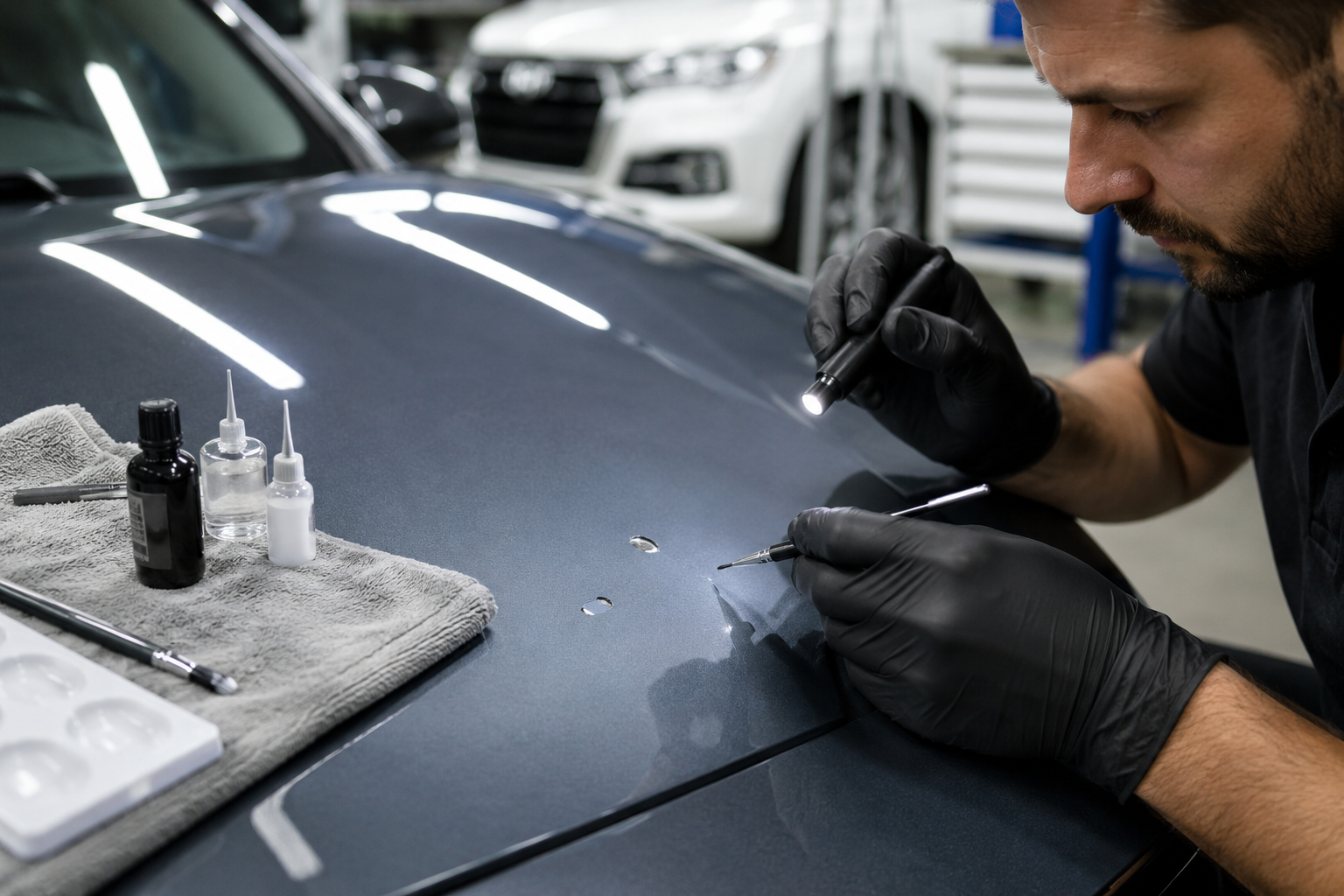
A rock chip may seem minor when it first appears, but the repair cost can vary widely depending on the type of damage involved. Some chips take only a short repair process, while others require more extensive work to restore the windshield or painted surface properly.
Drivers in Rock Hill, South Carolina often deal with road debris from highways, construction zones, and everyday traffic. Those conditions increase the chances of chips, cracks, and paint damage developing over time. In many cases, the final repair cost depends less on the size of the chip itself and more on what happened underneath the surface after the impact occurred.
Understanding what affects pricing can help vehicle owners decide when a repair should happen and why some damage costs significantly more to fix.
The Type of Damage Changes the Repair Cost
Some rock chips affect only the outer surface, while others damage deeper layers of the vehicle. That difference changes the repair method completely.
Windshield Chips Usually Vary by Depth
A shallow windshield chip may only require resin filling and polishing. These repairs are generally faster because the structural layers of the glass remain stable.
Deeper impact points create a different situation. When cracks begin spreading beneath the surface, technicians often need additional stabilization work before the damage worsens further.
In Rock Hill, hot pavement temperatures and direct sunlight can place stress on weakened windshield glass throughout the day, especially during summer months.
Paint Chips Can Become Body Damage Problems
Rock chips on painted surfaces sometimes go beyond cosmetic damage.
Depending on the impact strength, a chip may damage:
- Clear coat
- Paint layer
- Primer
- Metal underneath
Once moisture reaches exposed metal, rust can begin forming. Repair costs usually increase when corrosion removal and repainting become necessary.
Some Areas of the Vehicle Are Harder to Repair
The location of the chip often determines how difficult the repair process will be.
Certain sections of a vehicle require more labor, more precise paint blending, or extra calibration work after repairs are completed.
To better understand the difference, here are some areas that commonly increase repair complexity.
| Vehicle Area | Why Repairs May Cost More |
|---|---|
| Windshield edges | Cracks spread faster near corners |
| Driver sightline | Requires cleaner visual finish |
| Hood front edge | Highly visible after repair |
| Bumper corners | Paint blending is harder |
| Near safety sensors | Calibration may be needed |
| Curved body panels | More difficult refinishing work |
Modern vehicles with driver-assistance systems often require additional steps after windshield repairs. Cameras and sensors mounted behind the glass must sometimes be recalibrated to maintain proper functionality.
Delaying Repairs Often Leads to Higher Costs
Repair timing is one of the biggest factors affecting overall pricing.
Small chips are usually easier to stabilize early. Once the damage spreads, the repair process becomes more complicated and expensive.
The progression often happens gradually, which is why many drivers underestimate the problem at first.
How a Small Chip Becomes a Larger Repair
- A rock strikes the windshield or painted surface.
- Tiny fractures begin spreading internally.
- Heat and vibration weaken surrounding material.
- Moisture enters the damaged area.
- Cracks expand during driving.
- The repair area becomes too large for simple restoration.
This pattern is common on busy roads throughout Rock Hill, South Carolina, especially for drivers who regularly travel highways or construction routes.
Vehicle Design Can Increase Repair Difficulty
Not every vehicle uses the same materials, paint systems, or windshield technology. Newer models often require more specialized repair methods compared to older vehicles.
Advanced Vehicle Features That Affect Pricing
Some vehicle components increase labor time because technicians must work carefully around sensitive systems.
Common examples include:
- Rain-sensing windshields
- Lane assist cameras
- Heated glass systems
- Metallic paint finishes
- Pearl paint coatings
- Aluminum body panels
Luxury vehicles may also use specialty paint formulas that require additional blending work to avoid visible color differences after repairs.
Paint Matching Can Take Longer Than Expected
Paint correction is not always as simple as applying the original color code.
Several factors can affect how closely paint matches after a rock chip repair:
- Sun fading
- Oxidation
- Vehicle age
- Metallic flakes
- Existing paint wear
A vehicle parked outdoors regularly in Rock Hill may develop slight paint fading over time, which can make blending new paint more labor-intensive.
Repair and Replacement Involve Different Costs
Some rock chips can be repaired safely, while others require full replacement instead. The decision depends on both safety and repair quality.
Situations Where Repair Is Usually Enough
Technicians can often repair damage successfully when:
- The chip is small
- Cracks have not spread far
- Visibility remains clear
- Damage is recent
- The impact stays away from edges
Situations Where Replacement Is More Likely
Replacement may become necessary when:
- Cracks continue expanding
- Multiple chips appear together
- Damage reaches windshield edges
- Structural strength weakens
- Distortion affects visibility
The difference between a repair and a replacement can significantly change the final cost, especially on vehicles with advanced windshield technology.
Low-Quality Repairs Can Create More Expenses Later
Some drivers focus only on finding the cheapest possible repair. However, poor-quality work can create additional problems over time.
Weak repairs may fail under heat, vibration, or pressure changes. Incomplete paint sealing can also allow moisture to reach exposed surfaces underneath.
Common long-term problems linked to poor repairs include:
- Spreading windshield cracks
- Water leaks
- Rust formation
- Paint peeling
- Uneven paint texture
- Distorted visibility
Choosing proper repairs early often prevents larger restoration costs later.
Frequently Asked Questions About Rock Chip Repairs
Can a small windshield chip spread overnight?
Yes. Temperature changes, pressure, and vibration can cause small cracks to spread quickly, especially during hot weather in Rock Hill.
Are windshield repairs cheaper than replacements?
In most cases, yes. Early repairs usually cost far less than replacing the entire windshield.
Why do luxury vehicles cost more to repair?
Luxury vehicles often use advanced safety systems, specialty glass, and complex paint finishes that require additional labor and calibration work.
Can rock chips lead to rust on painted surfaces?
Yes. If the chip exposes bare metal and moisture enters the area, rust can begin forming underneath the paint.
How soon should rock chip damage be repaired?
It is usually best to schedule repairs as soon as possible before cracks spread or corrosion develops.
Conclusion
Rock chip repair costs can vary for many reasons, including damage depth, vehicle technology, repair timing, and the exact location of the impact. What seems like a minor chip at first can eventually become a much larger repair if cracks spread or moisture reaches deeper layers of the vehicle.
For drivers in Rock Hill, South Carolina, addressing damage early can help prevent more expensive repairs later while preserving both safety and appearance.
Mobile Brewer provides auto body and cosmetic repair services for vehicle owners dealing with rock chips, paint damage, and other surface repair needs throughout the area.
You might also like